







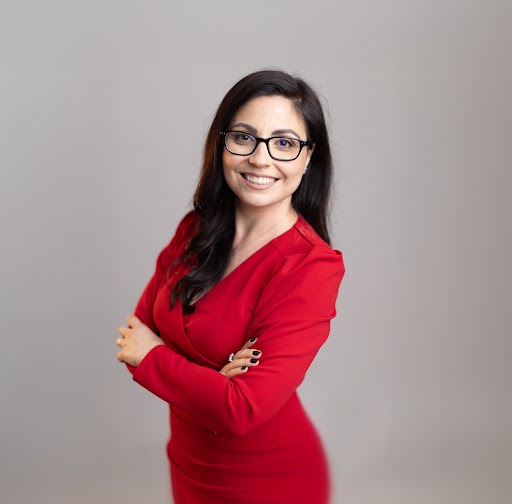
Anca Teletin, Grapefruit: “Creativity is not just a skill that you have, it’s a thinking pattern, and the way you approach life and solve problems”
She always focuses on developing the skills of the team and its members. Anca Teletin, COO & Shareholder Grapefruit is continuously supporting the organizational culture and optimizing the operational side, developing solutions and overseeing all internal business processes. Always at the center of people, Anca spots and defuses any issues that arise in a timely manner. AdHugger talked with Anca Teletin about the agency’s culture and internal people strategies, as well as creativity, the Team Happiness and Engagement Program and what place takes AI in their recruting process.
What are the 4-5 most relevant organizational culture trends you see in the digital industry right now? And how are you applying them at Grapefruit?
Organizational culture has shifted from being a “nice to have” to becoming a necessary part of a business’s stability. Over the past few years, I’ve noticed a few trends and developments that are actually a good sign that we are finally putting a real emphasis on this essential part of business.
We’re witnessing a clear transition towards authenticity rather than a carefully curated image. Companies can no longer rely on well-written employer branding messages that aren’t actually describing the reality. People can sense these gaps immediately and, naturally, they lose trust.
Then I’ve noticed that discussions around flexibility aren’t about remote work anymore, but rather on how decisions are made, how fast you adapt, how much autonomy people within a company actually have.
Moreover, this autonomy and the way we’re treating our teams decide if we can actually be a business that provides psychological safety. Especially in these times when people are already tense, they need a real space where they can speak up, challenge ideas, make mistakes without fearing that it costs their job (as long as they’re repairable mistakes, of course).
Another thing I’ve been happy to notice was that there’s a clear emphasis on learning and internal mobility, something we’ve been believing in for more than a decade now. People do not want to stay in a fixed role anymore, they want to evolve and explore.
Finally, to address the elephant in the room, technology, especially AI, is starting to reshape the way we work. However, it also highlighted an important component in our work: the need for genuine human connection. While we may be interacting with AI for daily tasks, I’ve noticed that people are seeking real faces, real conversations and companies that are putting effort into creating these connections.
While most of these trends have already been implemented a few years back in Grapefruit, they came as a natural response to real challenges we faced while growing. We focused on building systems that support communication, autonomy, and alignment, but always with culture in mind. In the end, processes can be top-knotch and absolutely perfect, but if people don’t feel connected, these won’t work.
What are the most effective retention strategies in today’s digital industry, and what has actually worked for you at Grapefruit?
I feel like we tend to overcomplicate retention. In reality, people stay where they feel they can grow and be seen.
When it comes to our „strategy” at Grapefruit, we just implemented a mix of consistent behaviours.
First, we ensured that clarity and transparency are present at all times. People need to understand where they are, where they can go, and what is expected from them. Then, we made sure to offer real opportunities for growth, not just empty promises. We’ve had many cases where people transitioned between roles because they showed curiosity, potential, and actually stated they’d like to explore more.
Moreover, we’ve always believed in autonomy with accountability. Meaning that we give people space to make decisions, but also expect them to take ownership for these decisions.
And maybe the most important one: ensuring a healthy team dynamic. People rarely leave just because of the work itself. They also leave because they don’t feel like a part of that team. Work can be managed, can be dealt with, can be balanced, but without a team you can honestly trust, you will end up leaving eventually. .
Now, I don’t want to paint the image that we are perfect, because we’re not. We’ve lost peopple along the way, but we always made sure to listen to their reasons, learn from them, and improve. But what I can say is this: an authentic and healthy culture is the strongest retention strategy you can build.
What do you really look for when hiring someone, beyond skills and experience?
Ever since joining Grapefruit, we’ve never looked at the recruiting or hiring process as a well-defined checklist. It’s been almost 14 years now, and this statement still stands. The key “skill” we look out for the most is their level of adaptability.
The context we work in changes constantly: priorities shift, new challenges appear, directions evolve. So I’m less interested in how well someone performs in a stable environment, and more in how they think and respond when things are unclear.
I look at how a person approaches challenges, makes decisions, and show up in moments of pressure or uncertainty.
Seeking clarity in both others and your own thinking process, being able to stand your ground (politely) when you express an opinion and being curious by nature are also good skills to have. We appreciate people who won’t limit themselves to „this is my role, this is all I can do or know”. People that are willing to explore, play, learn and connect different areas tend to grow and be autonomous much faster.
Which brings me to something I value a lot: a multidisciplinary mindset. The ability to look beyond your immediate scope, to understand how things connect, and to contribute outside strict role boundaries.
And then, of course, there’s the alignment with our values: fairness, ownership, and collaboration. That’s harder to define, but you can usually feel it.
I don’t expect people to come fully formed. Some of the strongest people in our team didn’t have all of this from the beginning. But they had the openness, the adaptability, and the mindset to grow across areas. And that made all the difference.
How do you assess creativity in a potential employee, given that it’s not something easily measurable?
I don’t think creativity can be measured in a traditional way. It oftentimes shows up in how people approach problems than in what they deliver.
I usually look at:
- how they think a challenge through;
- how comfortable they are with ambiguity;
- whether they can bring a different perspective, not just a correct one.
Sometimes, the most valuable signal is not the “perfect” answer, but the questions they ask.
Also, creativity without structure can become chaos. So I’m interested in that balance between creative thinking and clarity in execution.
In the end, I try to understand the person behind the work. Creativity is not just a skill that you have, it’s a thinking pattern, and the way you approach life and solve problems.
How relevant is AI in the recruiting process for you, especially in a context where many companies rely on it for filtering candidates?
AI is definitely helpful, especially when it comes to efficiency.It can support screening, organizing information, or speeding up certain steps. But I don’t see it as a decision-maker. Or, even more so, to replace real human interactions such as the interviews.
The most important part of recruitment still happens in the conversation. That’s where you understand the person: their mindset, their energy, how they think. AI can help us get to that point faster (aka filtering the CVs so you narrow down the list), but it can’t replace the nuance of a real interaction. After all, the CVs are just presenting the technical skills, what they are capable to execute, but at the end of the day I am also interested in: how they approach conflict, what is their thinking process during uncertain times, how passionate are they when talking about their area of expertise, how firm are they when presenting an opinion. Technical skills are important, of course they are, but how they approach teamwork, and their soft skills are detrimental to the balance, health and happiness of a team.
So, I see it as a tool for efficiency, not a filter that decides who is “in” or “out” or who’s a great fit and who is not. .
Looking back at the past few years, what kind of people have grown the most in your organization – and what made the difference for them?
That is actually something I’ve been thinking about a few days ago. The people who grew the most did not do so due to being the most experienced in their area.
They were actually the ones who took ownership early and were willing to step into uncertainty. Team members that were willing to dive head-first into a project, learn everything about it as fast as possible and make decisions even if they did not have enough answers.
The ones who asked for feedback constantly and optimized everything they could. They were curious enough to learn how they can do things better, and even more curious to go beyond their role.
And maybe something less visible: resilience. We all know by now that growth doesn’t come from comfort. It comes from navigating difficult moments and choosing to move forward.
We created the context, but they chose to step into it.
What actually makes people stay, in your experience?
Vulnerability, authenticity, transparency, and alignment. People don’t need perfection to stay. They need to know what is going on, to have the same values, to see that what you’re presenting online is honest. People stay if you are real with them.
Instead of aiming to “keep people” at all costs, we focused more on creating an environment where people will choose to stay. A place where they:
- Feel like they are part of something bigger, not just doing a job.
- Have the space to grow, evolve, explore.
- Work in a team where there is trust and support.
- Have leaders who are consistent, not only inspirational.
We constantly map out our team’s happiness levels through our Team Happiness and Engagement Program and these are just a few common picks from our team members. You don’t have to keep people. All you have to do is offer them the appropriate context to stay.
Your transition towards AI seems to have been part of a natural evolution, not a forced shift. How do you integrate new technologies while still preserving a healthy, people-centered culture?
We never saw AI as a method to replace people. It was about removing work that doesn’t add value, so people can focus on what actually matters. We started by automating repetitive processes, small steps. Jumping straight into a big transformation wasn’t necessarily an option. We were very conscious about the impact on people. There had to be a learning curve, of testing and learning where AI fits and where it doesn’t. After all, the biggest risk with technology is not the tool itself, but how you use it.
Now we constantly ask ourselves: Does this help us think better? Or move faster?
Preserving a people-centered culture means making sure that technology supports humans, not the other way around. Technology is evolving at such a rapid pace nowadays that we’re trying to figure things out as we go. But that’s just part of the process.